Learn it. Then prove you
actually understand it.
Your personal tutor — built for understanding, not just remembering.
Plain-text flashcards with spaced repetition at the core, and an AI layer woven through: a tutor on any card, generated decks, and an exam that gates your progress on real understanding.
$ curl -sSf https://alix.study/install.sh | sh
The flashcard core runs on its own. The AI features — the tutor, deck generation, and the exam — need an AI CLI installed and signed in: Claude Code by default, or Gemini, Codex, Copilot.
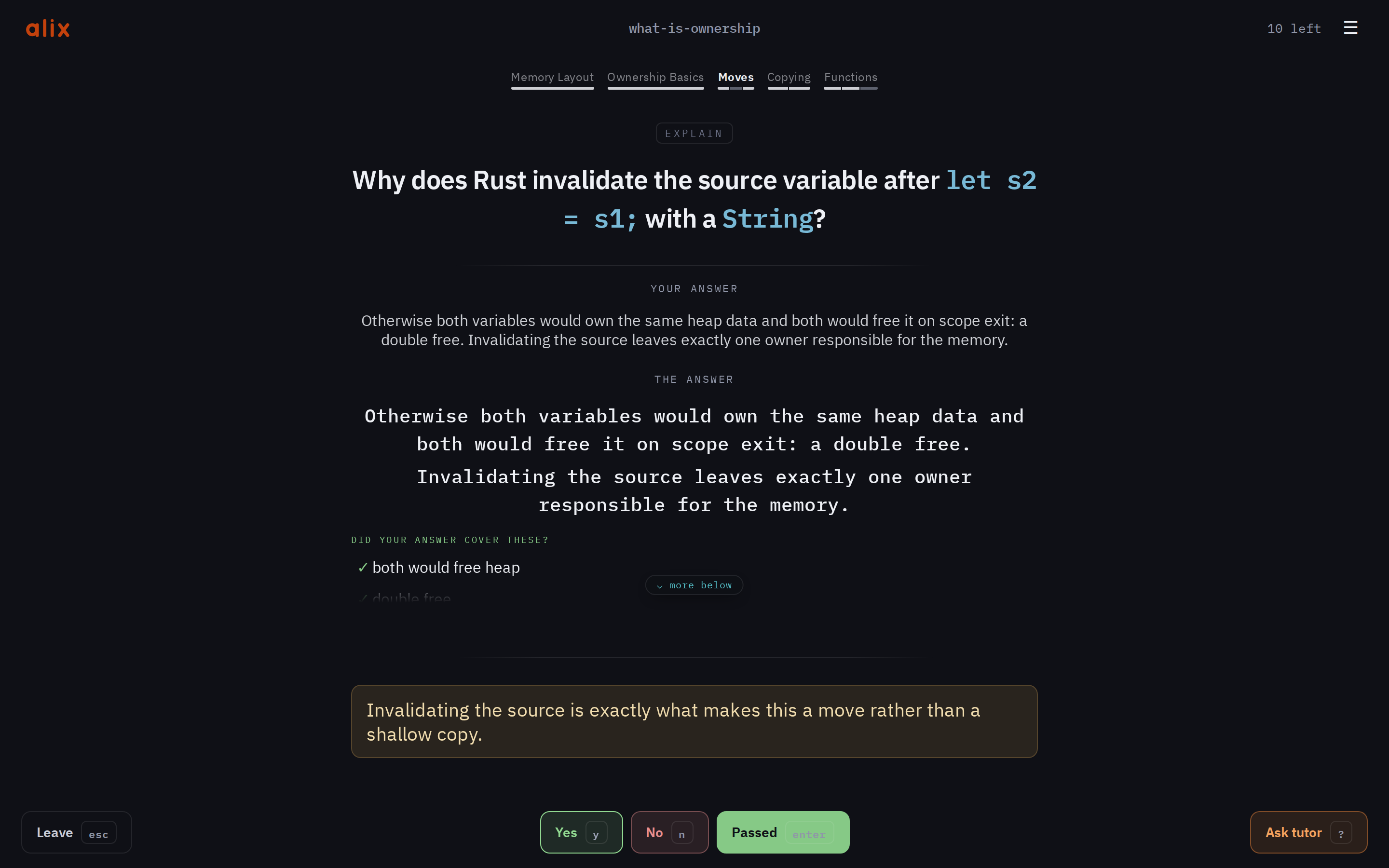
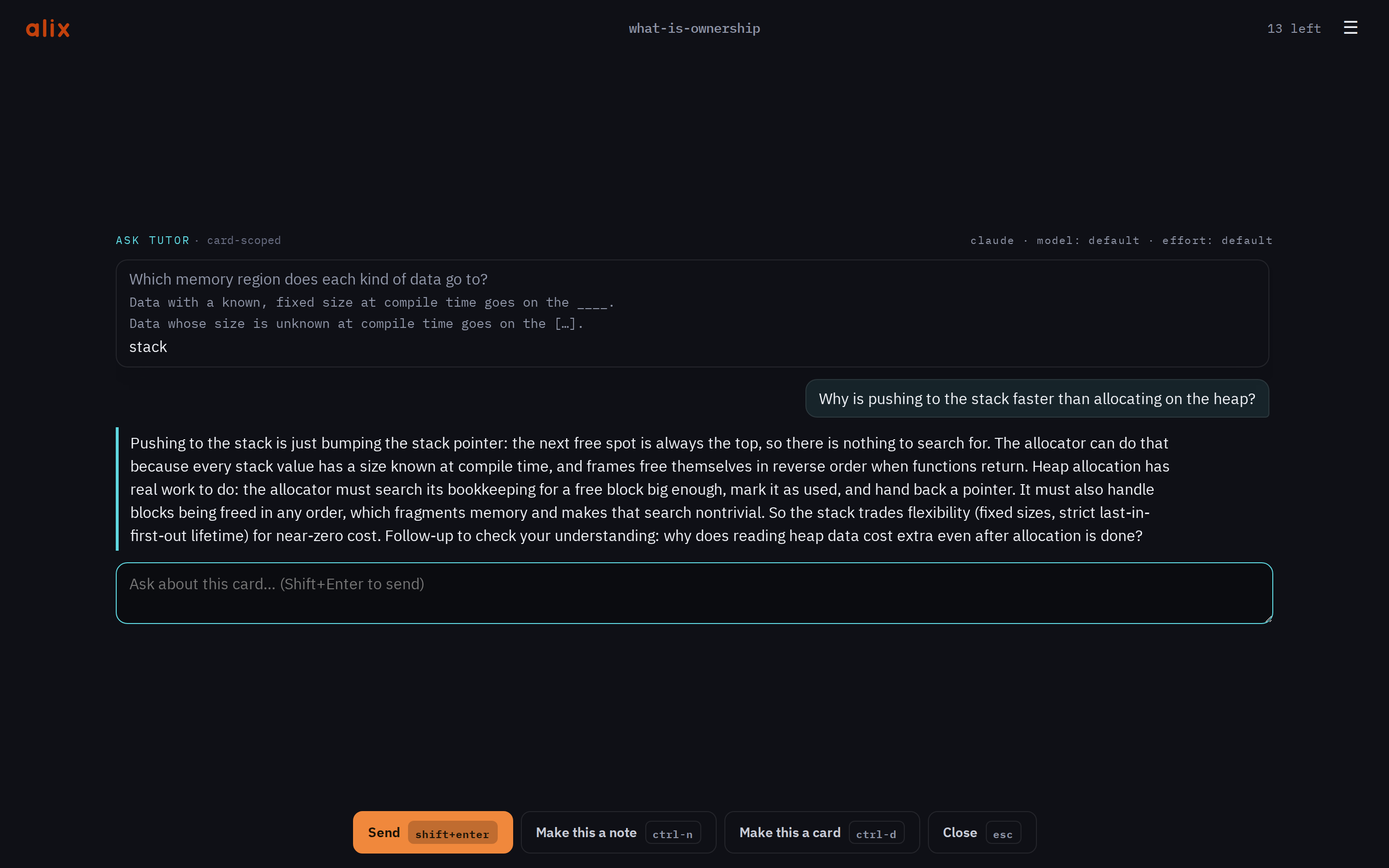
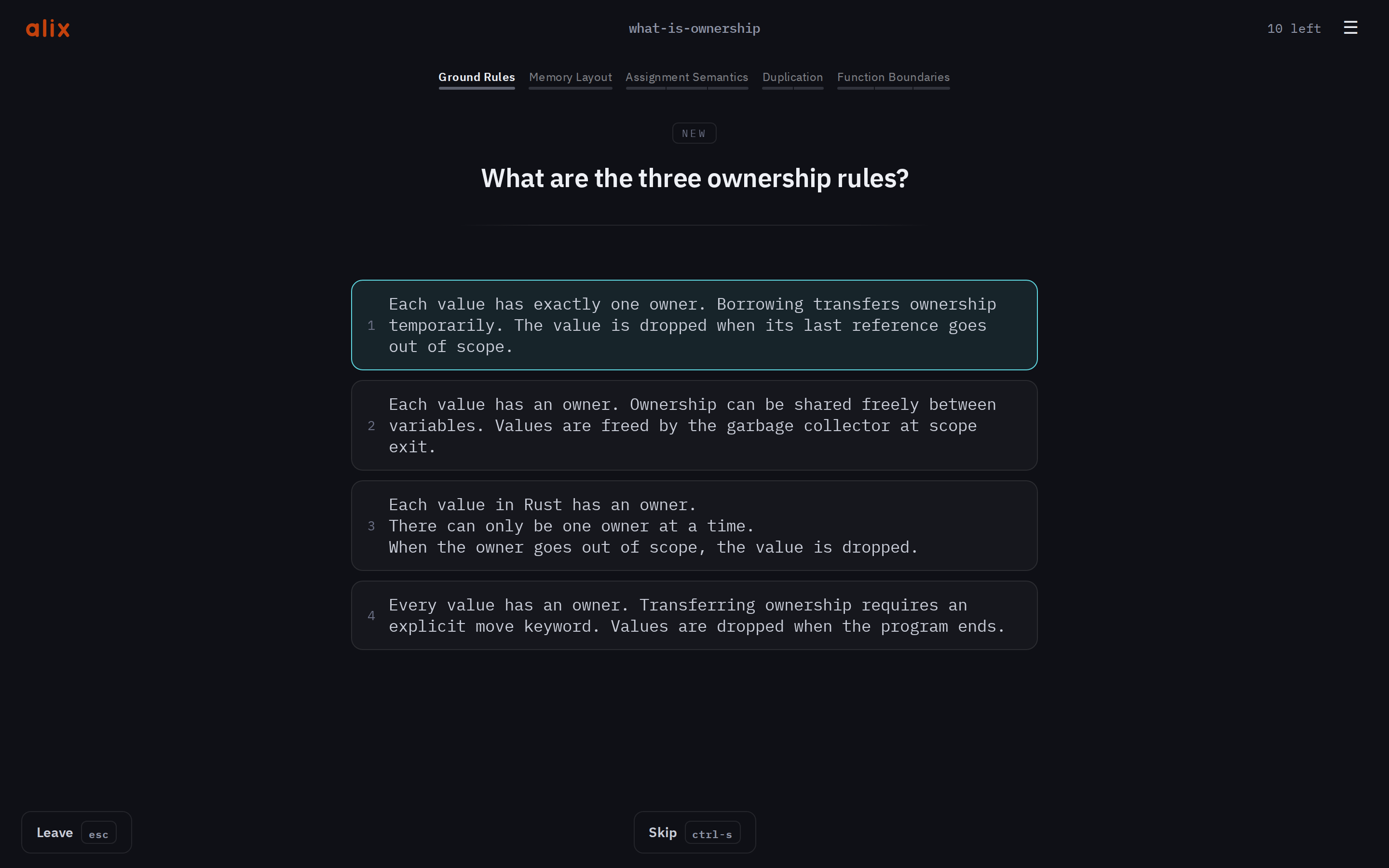
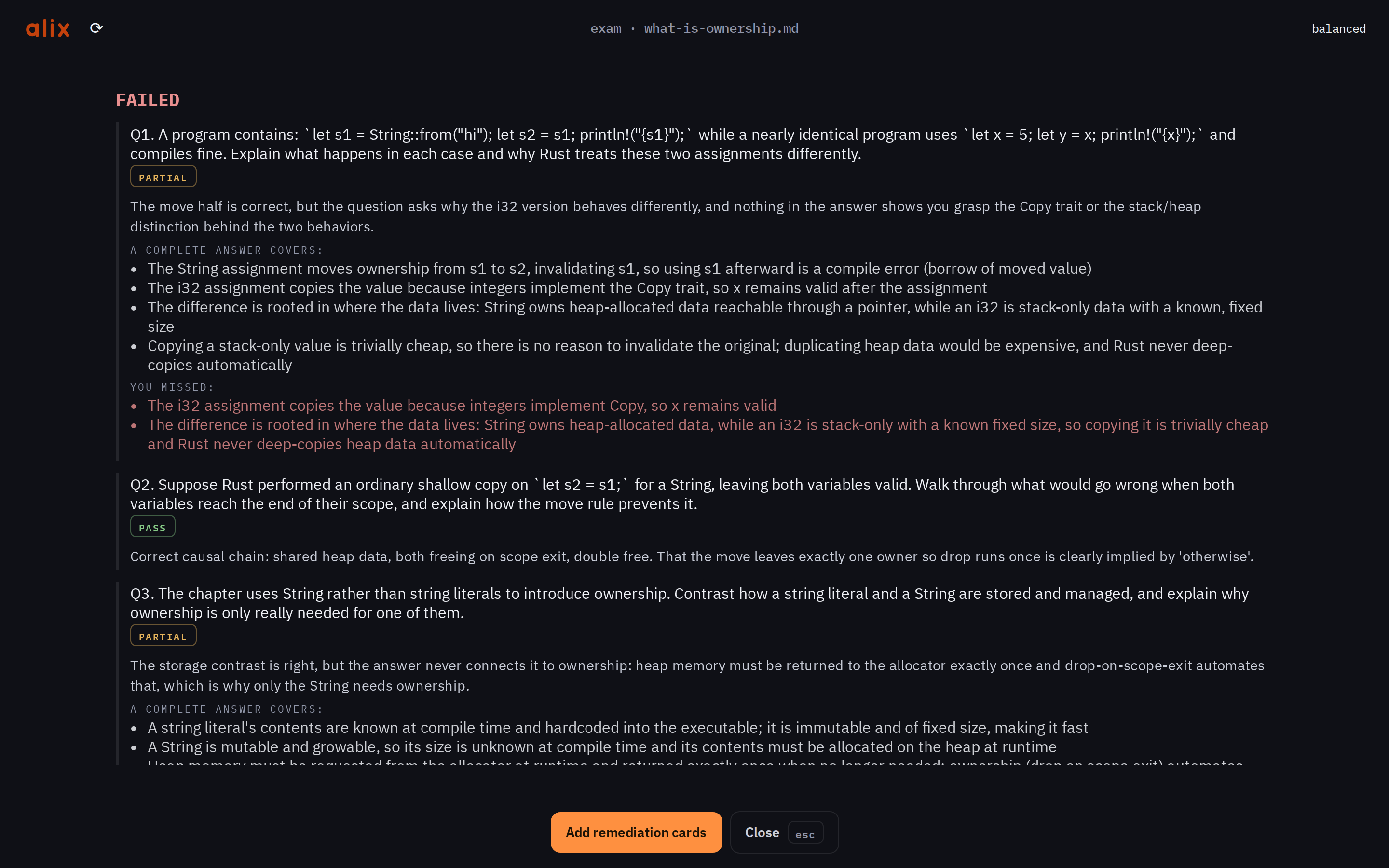
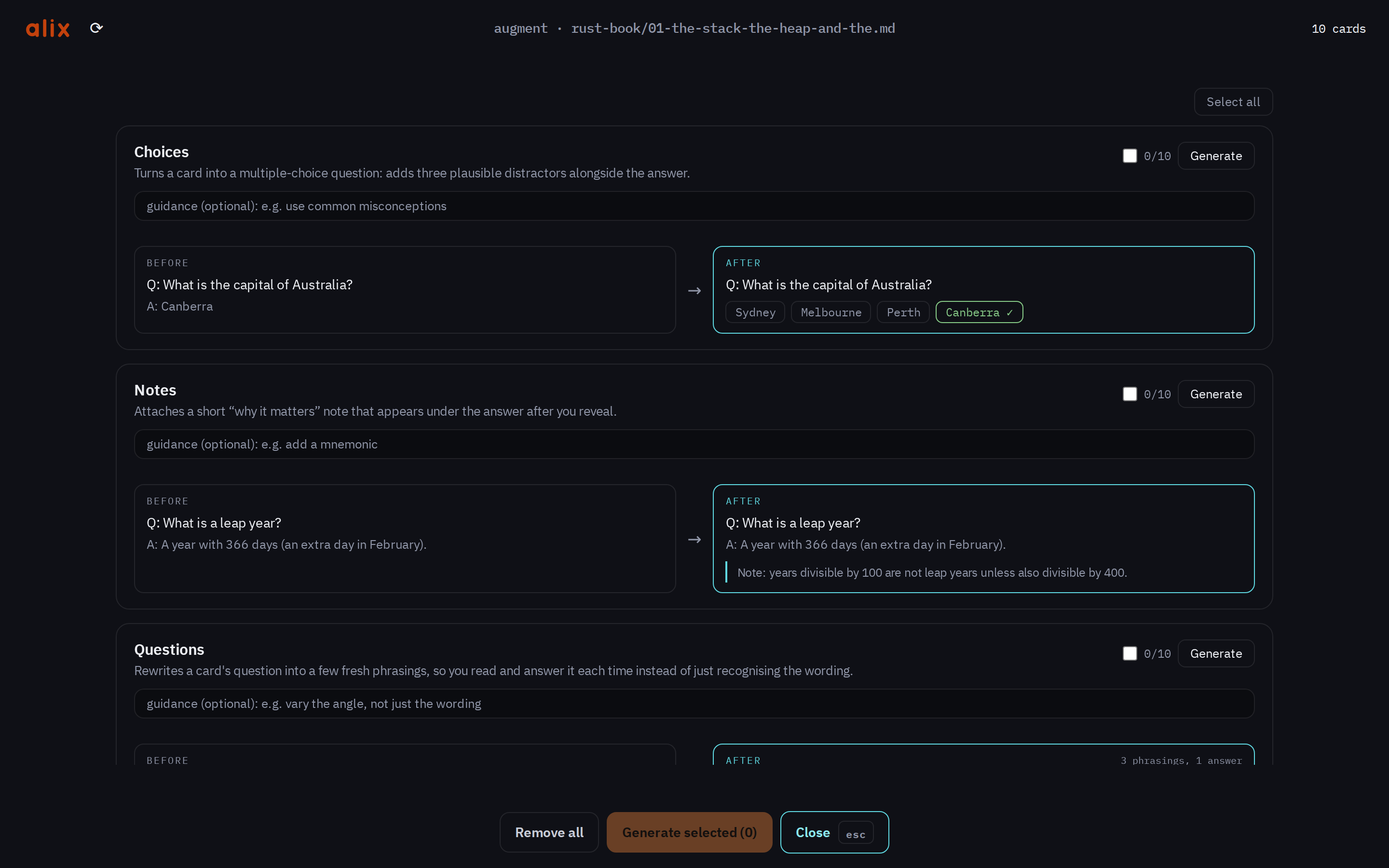
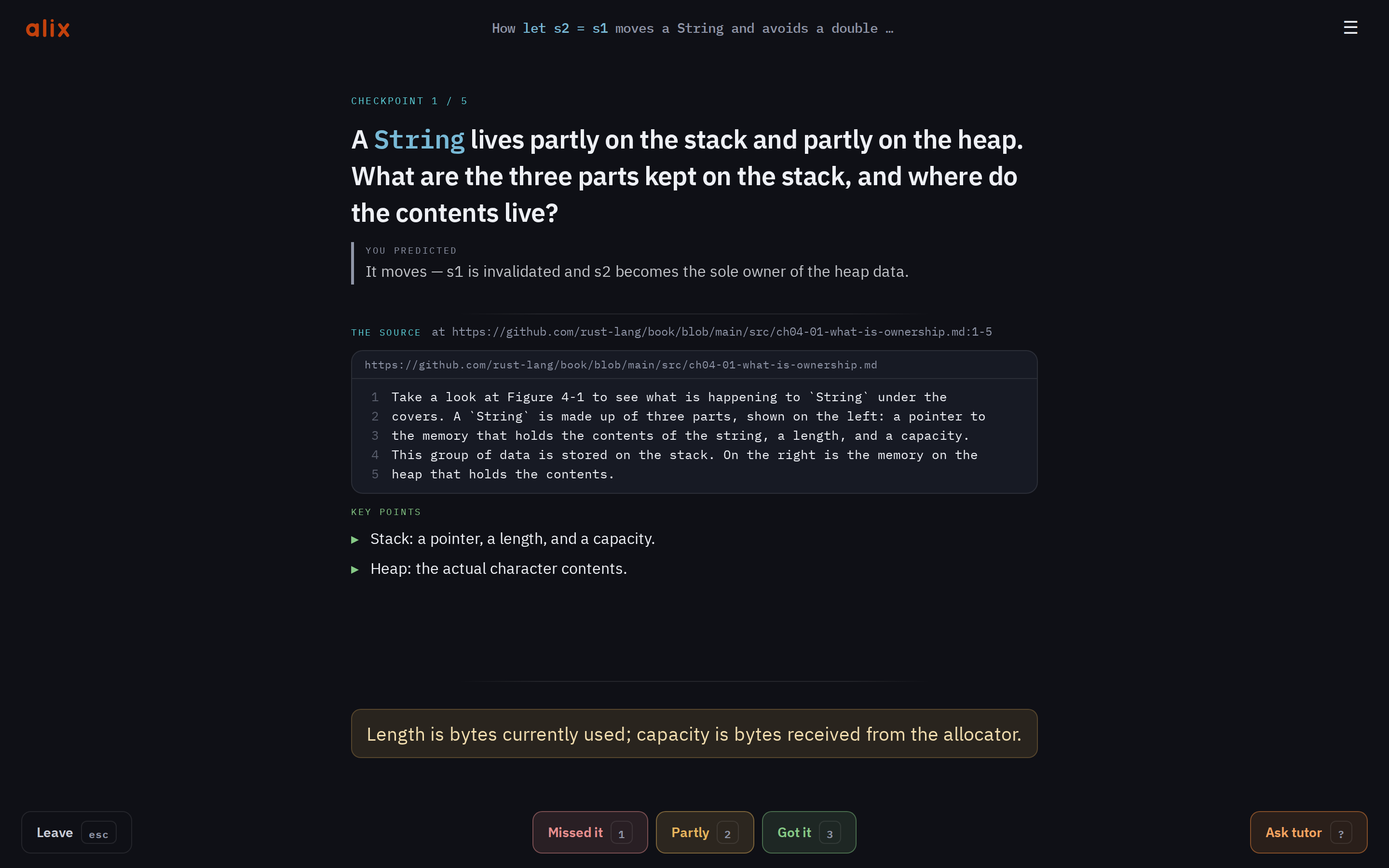
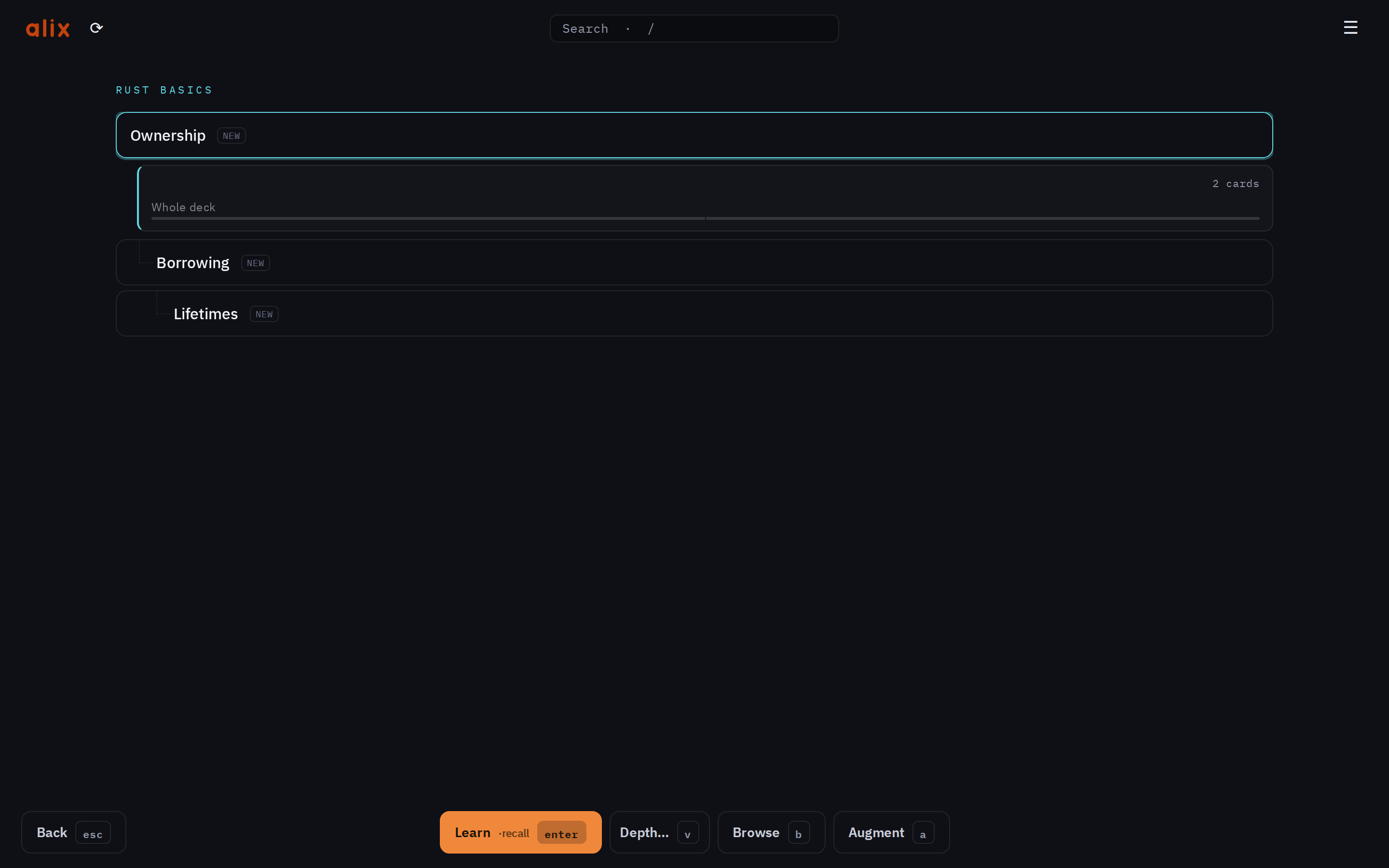
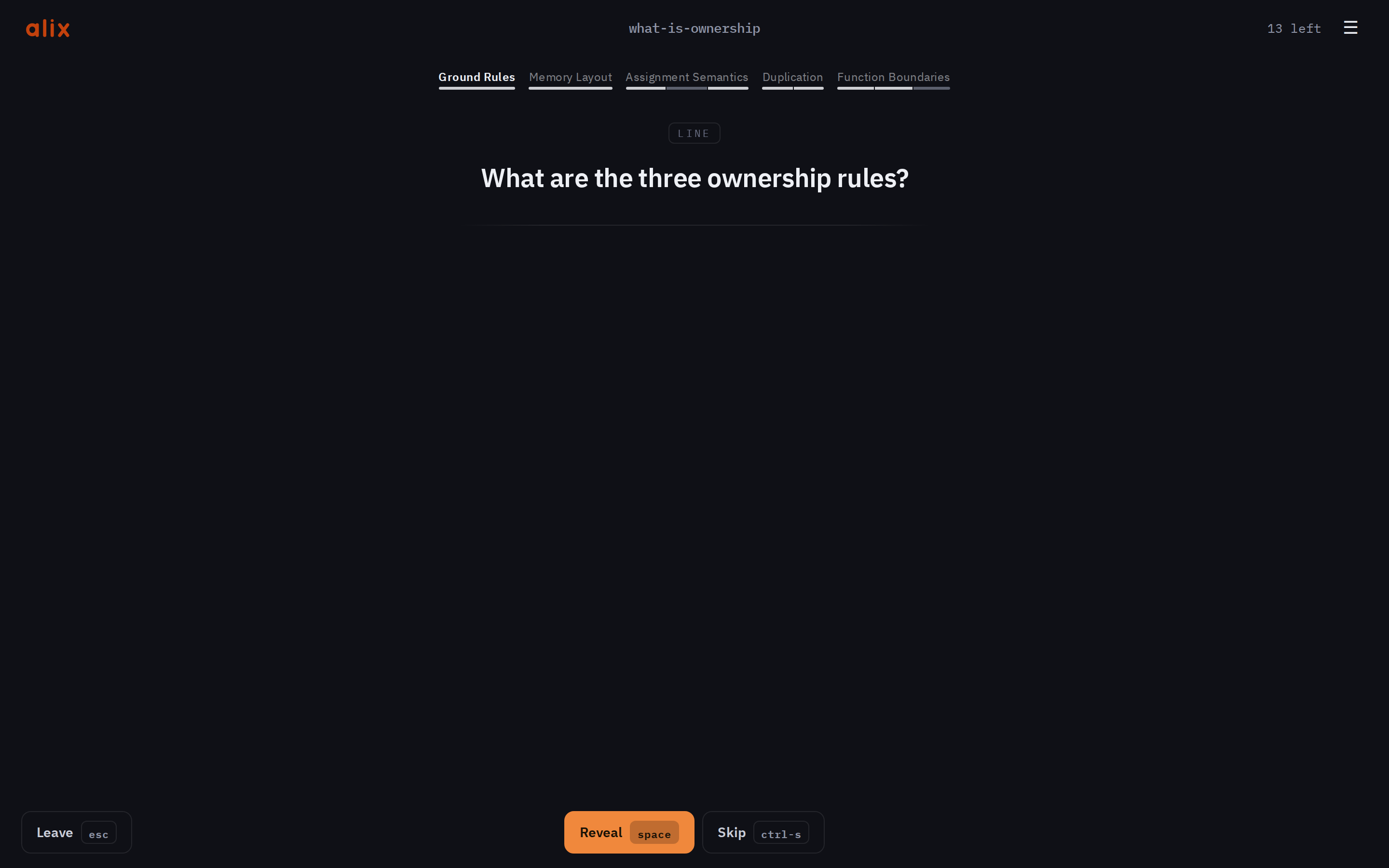
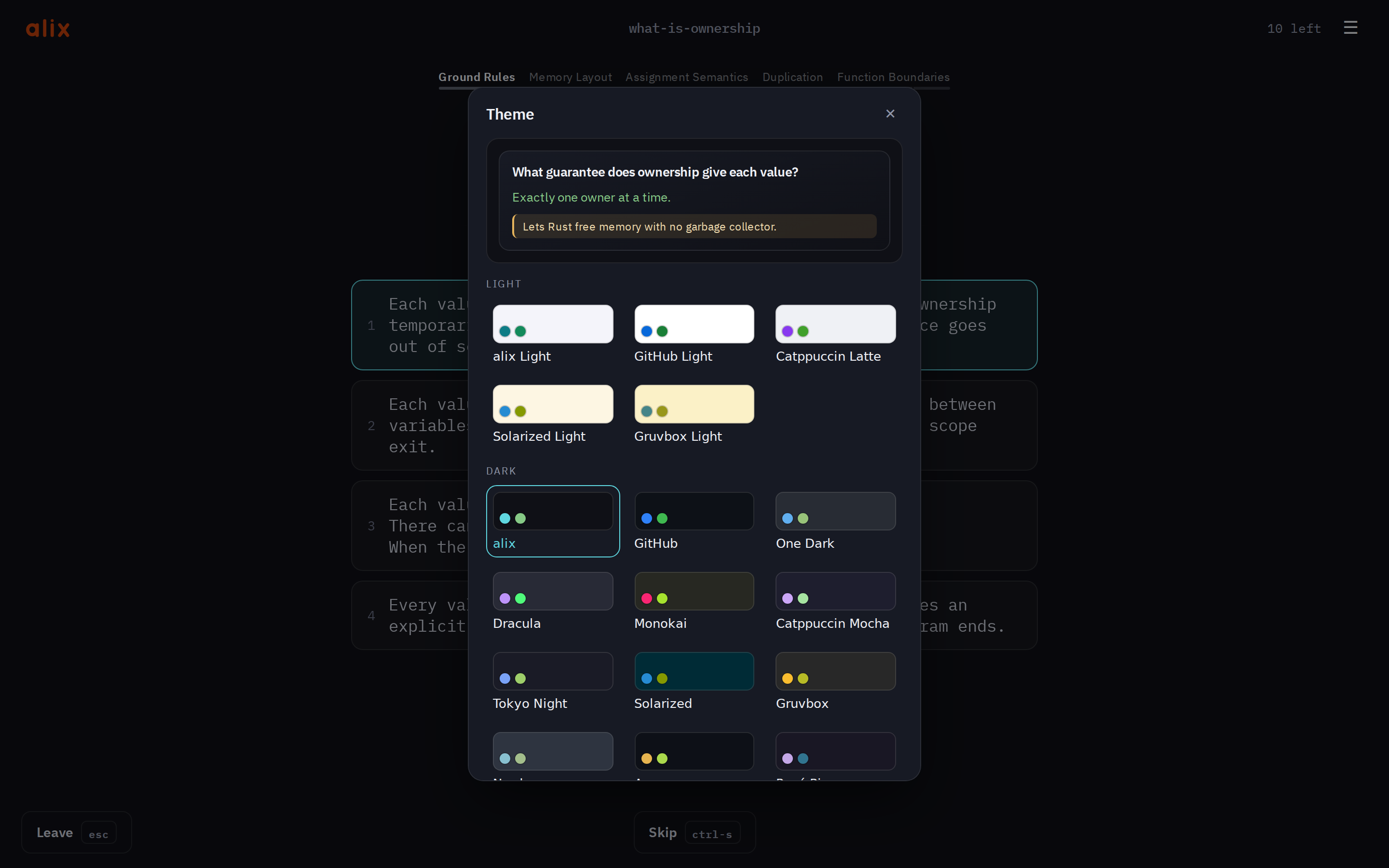
Tick the claims you covered — the grade comes from the claims, not a guess.
Is alix for you?
Five situations it's built for, then an honest list of where it plainly isn't there yet.
You're working through a book, a course, or a codebase, and it needs to actually stick
→ Point alix at the source and it drafts a deck (or a connected set of decks) from it, then brings the cards back on a schedule instead of leaving you to re-read and hope.
An AI explained something to you, and privately you're not sure you could reproduce it without help
→ alix's exam asks you fresh questions about the material and grades your written answer against the source itself, not a multiple-choice key, before it marks the topic done.
You mostly want solid spaced repetition for plain facts, terms, or vocabulary
→ The core is a plain-text review engine (fill-in-the-blank cards, both-direction review, images) that works with no AI at all; the AI pieces are optional on top.
You're a parent or teacher building a set of cards for a kid to review
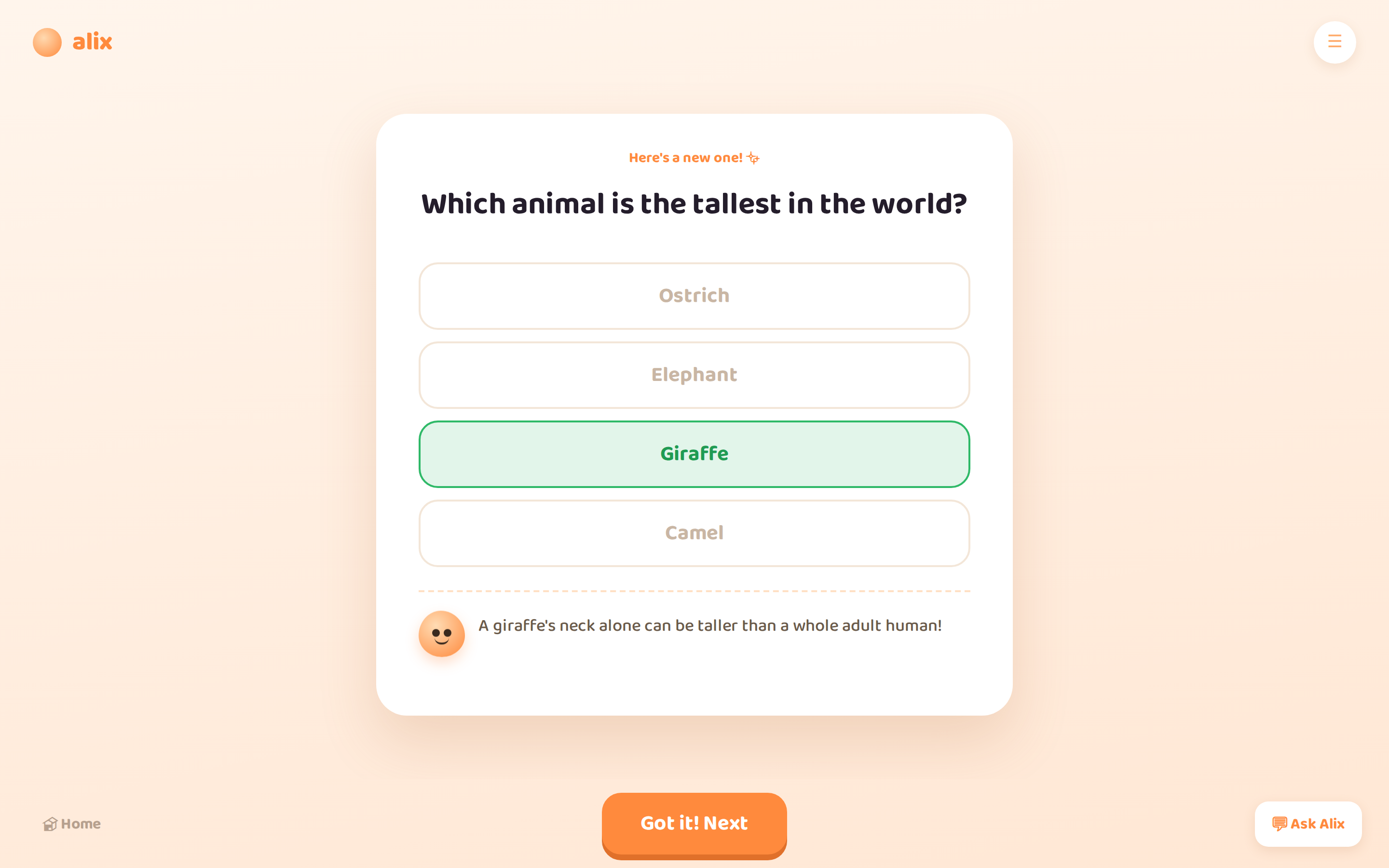
→ alix can serve a second, simpler screen aimed at kids: tap-to-answer, no keyboard. You build and check the deck yourself; the kid just opens it.
You already use Anki and wonder if there's a reason to look elsewhere
→ You can bring existing cards in with a plain import. What's different is the exam and the tutor layered on top, but if a mature tool with a large shared-deck community is what you need, Anki still does that better.
alix isn't (yet) for you if you want…
- A mobile app you download from a store. A native Android app exists (offline review, pairs with your desktop alix), but it's sideload-only for now: no app-store listing yet. A phone or tablet browser also works against the local web app.
- Zero setup for the AI parts. The tutor, deck generation, and the exam need you to separately install and log into an AI assistant (Claude Code by default, or Gemini, Codex, Copilot); that's extra setup, and typically its own subscription too.
- Automatic sync across your devices. Everything is plain files, no server, no accounts. Keeping them in sync means putting the folder in your own cloud tool (Dropbox, iCloud, Syncthing); alix doesn't do it for you.
- A finished, settled tool. alix is pre-1.0 and still changing: deck and persisted-state formats can change without a runtime compatibility path, so keep an independent backup of review history you care about.
- A library of ready-made decks. alix is built around decks you generate or write from your own material, not a marketplace of existing content.
Download
Pre-compiled binaries — no toolchain required.
Other targets (Intel Mac, …) on all releases — or cargo install alix.
Understand, don't just remember
Most tools optimize recall of isolated facts. alix's AI exam grades you against the source and unlocks what's next only once you can actually explain it.
A tutor on every card
Stuck or curious? Ask, and the AI explains in context — grounded in your deck's own source. Runs on the AI CLI you're already signed into: Claude by default — Gemini, Codex, and Copilot work too.
Proven spaced repetition
FSRS scheduling over plain-text decks you own — cloze, dual-direction, images, and dependencies between topics.
Traces: follow the thread
Predict-and-verify walks through real source code or papers — drilling the edges between facts, not just the facts.